Search Again
We support boolean queries, use +,-,<,>,~,* to alter the weighting of terms
University of Michigan Dental School Histology Core Facility
Histology core facility at the University of Michigan School of Dentistry provides histological services using standard histological techniques. The core specializes in sectioning of hard (demineralized) tissues.
- Resource
- RRID
- 1 year ago - submitted by Edyta Vieth
Short Course on the Genetics of Addiction
THIS RESOURCE IS NO LONGER IN SERVICE, documented August 23, 2016. This course emphasizes genetic applications and approaches to drug addiction research through methodological instruction based on literature, data sets and informatics resources drawn from studies of addiction related phenotypes. The course includes plenary sessions on major progress in addiction genetics, and discussion sessions in which students present their work for discussion on applications of genetic methods. Students will leave the course able to design and interpret genetic and genomic studies of addiction as they relate to their specific research question, and will be able to make use of current bioinformatics resources to identify research resources and make use of public data sources in their own research.
- Resource
- SciCrunch
- 15 years ago - by Anonymous
CuGenDB
Database to facilitate genomic and genetic data distribution, analysis, mining and integration for cucurbits. To store, mine, analyze, integrate and disseminate Cucurbitaceae family datasets and to provide central portal for cucurbit research and breeding community. Central portal for comparative and functional genomics of cucurbit crops.
- Resource
- RRID-Legacy
- 7 years ago - by Anonymous
University of Michigan Marine Renewable Energy Laboratory Core Facility
Core dedicated to developing technology to harness abundant, clean, and renewable marine energy in environmentally sustainable way and at competitive cost.
- Resource
- RRID
- 1 year ago - submitted by Edyta Vieth
3D Slicer
A free, open source software package for visualization and image analysis including registration, segmentation, and quantification of medical image data. Slicer provides a graphical user interface to a powerful set of tools so they can be used by end-user clinicians and researchers alike. 3D Slicer is natively designed to be available on multiple platforms, including Windows, Linux and Mac Os X. Slicer is based on VTK (http://public.kitware.com/vtk) and has a modular architecture for easy addition of new functionality. It uses an XML-based file format called MRML - Medical Reality Markup Language which can be used as an interchange format among medical imaging applications. Slicer is primarily written in C++ and Tcl.
- Resource
- SciCrunch
- 17 years ago - by Anonymous
ReproMan
Software tool to simplify creation and management of computing environments in Neuroimaging.
- Resource
- NIF
- 6 years ago - by Anonymous
Alfalfa_DArTag_BI_Cornell_University v1
Alfalfa_DArTag_BI_Cornell_University 1.0 is an alfalfa DArTag genotyping panel of 3000 loci. DArTag assay uses custom designed oligos to amplify targeted SNPs, and their flanking sequences, prior to NGS sequencing. The sequenced amplicons are demultiplexed and targeted SNPs/haplotypes are analysed using DArT P/L’s proprietary pipeline (https://www.diversityarrays.com/services/targeted-genotying/). The markers were selected from a diverse set of 40 cultivated alfalfa parents and founders from North American breeding programs. The panel is suitable for genotyping tetraploid alfalfa for breeding decisions and selection. Usage of the panel on diploid Medicago was tested and resulted in higher missing data and fewer polymorphic data points. Usage of the panel outside of Medicago sativa is likely to result in higher missing data and fewer data points. Panel developed in collaboration between DArT and Breeding Insight at Cornell University.
- Resource
- RRID
- 1 year ago - submitted by Moira Sheehan
glycomedb
GlycomeDB is a database of all known carbohydrate structures. This was achieved by crosslinking several other databases of carbohydrate structures by using the GlycoCT XML language specification. We have analyzed all of the existing public databases and defined a sequence format based on XML (GlycoCT) capable of storing all structural information of carbohydrate sequences. We have implemented a library of parsers for the interpretation of the different encoding schemes for carbohydrates. With this library we have translated the carbohydrate sequences of all freely available databases (CFG , KEGG, GLYCOSCIENCES.de, BCSDB and Carbbank) to GlycoCT, and created a new database (GlycomeDB) containing all structures and annotations. During the process of data integration we found multiple inconsistencies in the existing databases which were corrected in collaboration with the responsible curators. With the new database, GlycomeDB, it is possible to get an overview of all carbohydrate structures in the different databases and to crosslink common structures in the different databases. Scientists are now able to search for a particular structure in the meta database and get information about the occurrence of this structure in the five carbohydrate structure databases.
- Resource
- SciCrunch
- 15 years ago - by Anonymous
ProteomeTools
Project for building molecular and digital tools from human proteome to facilitate biomedical research, drug discovery, personalized medicine and life science research.
- Resource
- RRID-Legacy
- 6 years ago - submitted by Nathan Anderson
singleCellTK
Software R package provides interface to popular tools for importing, quality control, analysis, and visualization of single cell RNA-seq data. Allows users to integrate tools from various packages at different stages of analysis workflow.
- Resource
- RRID
- 1 year ago - by Anonymous
FuncExpression
THIS RESOURCE IS NO LONGER IN SERVICE, documented on July 11, 2012. FuncExpression is a web-based resource for functional interpretation of large scale genomics data. FuncExpression can be used for the functional comparison of plant, animal, and fungal gene name lists generated from genomics and proteomics experiments. Multiple gene lists can be classified, compared and visualized. FuncExpression supports two way-integration of plant gene functional information and the gene expression data, which allows for further cross-validation with plant microarray data from related experiments at BarleyBase. Platform: Online tool
- Resource
- SciCrunch
- 15 years ago - by Anonymous
Fujifilm: FLA-5100 Scanner
EImaging scanner that images fluorescent and radioisotopic samples. It can be used for protein electrophoresis, genomics array analysis, fluorescence, radioisotope detection, and chemiluminescence detection by direct detection method.
- Resource
- SciCrunch
- 6 years ago - submitted by Leah Booher
University of Michigan Medical School BRCF Proteomics Resource Core Facility
Core is dedicated to protein analysis and applying mass spectrometry-based proteomic approaches to varied biological questions.
- Resource
- RRID
- 1 year ago - submitted by Edyta Vieth
WEGO - Web Gene Ontology Annotation Plot
Web Gene Ontology Annotation Plot (WEGO) is a simple but useful tool for plotting Gene Ontology (GO) annotation results. Different from other commercial software for chart creating, WEGO is designed to deal with the directed acyclic graph (DAG) structure of GO to facilitate histogram creation of GO annotation results. WEGO has been widely used in many important biological research projects, such as the rice genome project and the silkworm genome project. It has become one of the useful tools for downstream gene annotation analysis, especially when performing comparative genomics tasks. Platform: Online tool
- Resource
- SciCrunch
- 15 years ago - by Anonymous
University of Massachusetts Medical School Metabolic Disease Research Center Core Facility
UMass Metabolic Disease Research Center (MDRC), formerly the National Mouse Metabolic Phenotyping Center, is a core facility that performs standardized experiments using state-of-the-art equipment for the purpose of investigating transgenic mouse models of diabetes, obesity, and metabolic liver disease. Provides metabolic and functional characterization of mouse models of human diseases that are developed by academic and industry researchers in joint efforts to understand metabolic diseases and to identify new therapies.
- Resource
- SciCrunch
- 6 years ago - submitted by Edyta Vieth
University of Bergen Genomics Core Facility
Provides genomic services to study genome structure, dynamics and function using Illumina next generation sequencing. Offers expert advice on experimental design and bioinformatics analysis, training and assistance on data storage solutions.
- Resource
- RRID
- 1 year ago - submitted by Carla Fernandes
CharProtDB: Characterized Protein Database
The Characterized Protein Database, CharProtDB, is designed and being developed as a resource of expertly curated, experimentally characterized proteins described in published literature. For each protein record in CharProtDB, storage of several data types is supported. It includes functional annotation (several instances of protein names and gene symbols) taxonomic classification, literature links, specific Gene Ontology (GO) terms and GO evidence codes, EC (Enzyme Commisssion) and TC (Transport Classification) numbers and protein sequence. Additionally, each protein record is associated with cross links to all public accessions in major protein databases as ��synonymous accessions��. Each of the above data types can be linked to as many literature references as possible. Every CharProtDB entry requires minimum data types to be furnished. They are protein name, GO terms and supporting reference(s) associated to GO evidence codes. Annotating using the GO system is of importance for several reasons; the GO system captures defined concepts (the GO terms) with unique ids, which can be attached to specific genes and the three controlled vocabularies of the GO allow for the capture of much more annotation information than is traditionally captured in protein common names, including, for example, not just the function of the protein, but its location as well. GO evidence codes implemented in CharProtDB directly correlate with the GO consortium definitions of experimental codes. CharProtDB tools link characterization data from multiple input streams through synonymous accessions or direct sequence identity. CharProtDB can represent multiple characterizations of the same protein, with proper attribution and links to database sources. Users can use a variety of search terms including protein name, gene symbol, EC number, organism name, accessions or any text to search the database. Following the search, a display page lists all the proteins that match the search term. Click on the protein name to view more detailed annotated information for each protein. Additionally, each protein record can be annotated.
- Resource
- SciCrunch
- 15 years ago - by Anonymous
QuASIMoDOH
Software tool to describe spatial patterns in degrees of inhomogeneity and to incorporate intensity based correction to analyze images with wide range of resolutions. Can be used to assess protein and lipid patterns, quantifying distribution changes and spatial reorganization at cell surface.
- Resource
- RRID-Legacy
- 6 years ago - by Anonymous
Cancer Research Institute IFOM EMSM Electron Microscopy Single Molecules Core Facility
Facility uses transmission electron microscopy coupled to low angle rotary shadowing to visualize nucleic acids. This technique allows the inspection of the fine ultrastructure of in vivo chromosomal DNA intermediates on properly enriched genomic DNA samples.
- Resource
- SciCrunch
- 1 year ago - submitted by Edyta Vieth
LHP LHDL
Distributed repository of anatomo-functional data and of simulation algorithms, fully integrated into a seamless simulation environment and directly accessible. This infrastructure will be used to create the physiome of the human musculo-skeletal system.
- Resource
- SciCrunch
- 14 years ago - by Anonymous
About
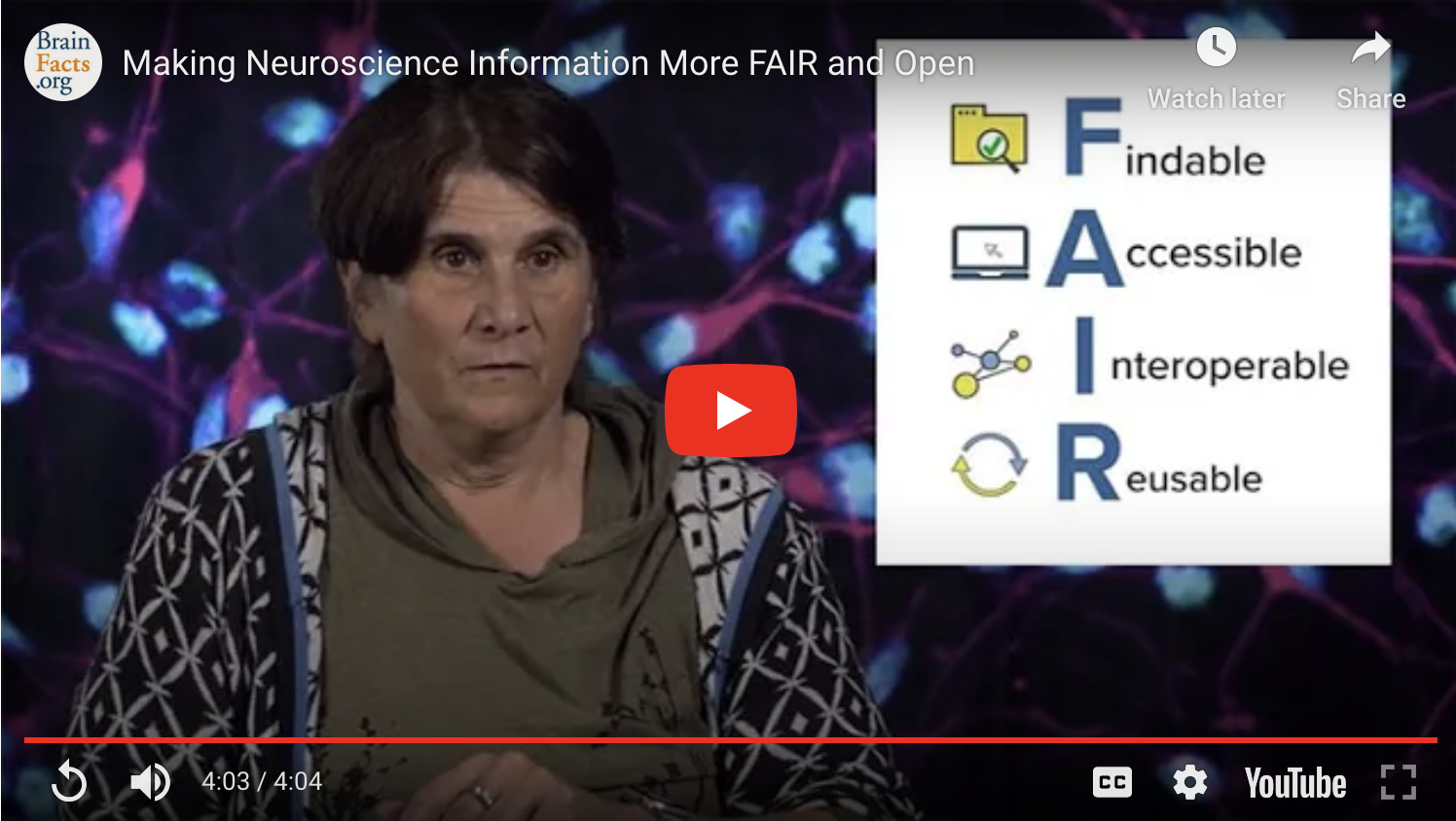
The SciCrunch Infrastructure was developed as a cooperative data platform to be used by diverse communities in making data more FAIR.
Contact Us
 scicrunch.org