Search Again
We support boolean queries, use +,-,<,>,~,* to alter the weighting of terms
Cancer Control using Population-based Registries and Biobanks
CCPRB (Cancer Control using Population-based Registries and Biobanks) is a Network of Excellence project within the sixth framework programme of the European Union. It is aiming at improved control of cancer by facilitating research linking biobanks and cancer registries. The project involves a systematic quality assurance and continuous development of standards and norms for human sample biobanks in Europe, as well as development of improved integrity-protection standards in the handling of sensitive information in connection with biobank-based research. The samples in the biobanks will be used in large-scale cancer research searching for genetic and infectious causes to cancer, in particular in the areas of breast and colorectal cancer and childhood leukemia. Project objectives: * Provide the study base for uniquely large population-based prospective studies on cancer * Define and implement a generally applicable European Quality Standard for Biobanking that will include improved data and specimen standardization, acquisition and analysis, reliable and standardized statistical analysis as well as improved management and co-ordination of European biobanks. * Define and promote the implementation of integrity-proof methods for biobank-based research involving well defined and secure third party code-keeping systems. * Enable large-scale, population-based research on: ** evaluation of cancer treatment and role of molecular markers in treatment selection ** use over-generation registry linkages applied to large biobank cohorts to identify and evaluate genetic predisposition associated with increased cancer risk as well as interactions with common environmental exposures. ** use over-generation registry linkages applied to large biobank cohorts to explore and evaluate intrauterine exposures associated with increased cancer risk ** exploit the power of large population cohorts for design of optimal strategies for cancer prevention and its evaluation. * Establish a Europe-wide network for spreading the awareness of i) the data, samples and knowledge generated European biobank-based research ii) possibilities for future biobank-based research and iii) the best practice quality standards for biobank-based research.
- Resource
- SciCrunch
- 16 years ago - by Anonymous
Memorial Sloan Kettering Cancer Center Antibody and Bioresource Core Facility
ABCF can provide MAbs from established hybridomas for RESEARCH PURPOSES ONLY, can assist in generating MAbs, offers a weekly mycoplasmal contamination screening service for tissue culture samples, distributes cell lines developed at Memorial Sloan Kettering Cancer Center and Rockefeller University.
- Resource
- SciCrunch
- 7 years ago - submitted by Edyta Vieth
Massachusetts General Hospital NGS Core Facility
Core offers sequencing, upstream library construction (bulk RNA/DNA, single-cell), and post-sequencing analysis. Core uses Illumina NextSeq 2000 sequencers (and a MiSeq). Single-cell (fresh, frozen, FFPE) libraries (3' & 5' RNA-Seq, CITE-Seq, ATAC-Seq, Multiome, FLEX) are made with 10X Chromium X.
- Resource
- SciCrunch
- 1 year ago - submitted by Edyta Vieth
Hackensack University Tissue Bank
The Tissue Bank stores tissue, blood, and bone marrow samples that have been taken from patients who have given their consent after they have undergone biopsies, surgery, or other procedures for cancer at the John Theurer Cancer Center. Our scientists use these samples to analyze and study multiple types of human cancer, with a goal toward learning more about how cancer develops, developing innovative new treatments, and determining how well a treatment is working. Our Tissue Bank is overseen by our program and medical director, Andre Goy, M.D., M.S., who is also deputy director of the Cancer Center and chief of the Division of Lymphoma; and our scientific director, K. Stephen Suh, Ph.D. Currently, 30 percent of our Tissue Bank team members work in our clinics, and 70 percent of our team works ����?��������??behind the scenes,����?��������?? conducting important scientific research without meeting patients.
- Resource
- SciCrunch
- 16 years ago - by Anonymous
Garvan Institute of Medical Research Molecular Genetics Core Facility
Core facility for high throughput services covering the areas of Capillary Sequencing, Mouse Genotyping, SNP Genotyping, Clinical Diagnostic Sequencing, Cell Line Identification, Gene Expression Analysis and DNA/RNA extraction.
- Resource
- SciCrunch
- 7 years ago - submitted by Edyta Vieth
Children's Hospital of Philadelphia Research Institute CHOP Gastrointestinal Epithelium Modeling Core Facility
Core is component of the GEM Program collaborative research effort focused on accelerating discovery and innovation using patient tissue-derived organoids. GEM Core staff generate and maintain living biobank of tissue-derived organoids with matched original tissue and blood specimens and provide access to specialized training, protocols, and reagents.
- Resource
- SciCrunch
- 1 year ago - submitted by Edyta Vieth
AmphoraNet
Webserver implementation of the AMPHORA2 workflow for phylogenetic analysis of metagenomic shotgun sequencing data. It is capable of assigning a probability-weighted taxonomic group for each phylogenetic marker gene found in the input metagenomic sample.
- Resource
- SciCrunch
- 13 years ago - by Anonymous
JTK_CYCLE
Software R package for Detecting Rhythmic Components in Genome-Scale Data Sets. Non-parametric algorithm to identify rhythmic components in large datasets. Identifies and characterizes cycling variables in large datasets.
- Resource
- RRID-Legacy
- 7 years ago - by Anonymous
Uppsala Monitoring Centre; Uppsala; Sweden
Uppsala Monitoring Centre, located in Uppsala, Sweden, is the field name for the World Health Organization Collaborating Centre for International Drug Monitoring. UMC works by collecting, assessing and communicating information from member countries' national pharmacovigilance centres in regard to benefits, harm, effectiveness and risks of drugs since 1978.
- Resource
- RRID
- 1 year ago - submitted by Edyta Vieth
Zebrafish International Resource Center
Center that supplies access to wild-type, mutant, and transgenic zebrafish lines, EST's/cDNAs, antibodies and fish health services. ZIRC Health Services include diagnostic pathology testing for zebrafish and other small laboratory fish species.
- Resource
- SciCrunch
- 17 years ago - by Anonymous
Analysis, Visualization, and Informatics Lab-space (AnVIL)
Portal to facilitate integration and computing on and across large datasets generated by NHGRI programs, as well as initiatives funded by National Institutes of Health or by other agencies that support human genomics research. Resource for genomic scientific community, that leverages cloud based infrastructure for democratizing genomic data access, sharing and computing across large genomic, and genomic related data sets. Component of federated data ecosystem, and is expected to collaborate and integrate with other genomic data resources through adoption of FAIR (Findable, Accessible, Interoperable, Reusable) principles, as their specifications emerge from scientific community. Will provide collaborative environment, where datasets and analysis workflows can be shared within consortium and be prepared for public release to broad scientific community through AnVIL user interfaces.
- Resource
- dkNET
- 7 years ago - submitted by Ko-Wei Lin
ggsci
Software R package that provides scientific-themed color palettes for ggplot2, offering visually appealing and publication-quality color schemes inspired by scientific journals and data visualization standards.
- Resource
- RRID
- 1 year ago - by Anonymous
Strelka2
Software for somatic single nucleotide variant (SNV) and small indel detection from sequencing data of matched tumor-normal samples. Strelka2 germline and somatic small variant caller.
- Resource
- SciCrunch
- 13 years ago - by Anonymous
seaborn
Software Python tool as data visualization library based on matplotlib. Provides interface for drawing attractive and informative statistical graphics. Statistical data visualization using matplotlib.
- Resource
- RRID-Legacy
- 7 years ago - submitted by Marin Manuel
Montana State University CBE Bioimaging and Analytical Core Facility
Core offers imaging and analysis of intact biofilms to capture with ultimate precision the position, interactions, activity, and identification of microbes in real-time from intact samples. With our broad range of analytical capabilities, we can determine how microbes are interacting and altering their environmental conditions. We provide one-on-one training, method development, proposal writing, troubleshooting and data analysis services to help you meet your biofilm-related analytical and imaging needs.
- Resource
- SciCrunch
- 1 year ago - submitted by Edyta Vieth
RLS Foundation
Non-profit organization providing the latest information about Restless Legs Syndrome (RLS). Its goals are to increase awareness, improve treatments, and through research, find a cure for RLS, a condition which severely affects the lives of millions of individuals. By educating healthcare providers about RLS symptoms, diagnosis, and treatment, the RLS Foundation helps patients receive the quality care they both need and deserve. In recent years the Foundation has provided information to healthcare providers at many exhibit meetings, including the American Academy of Neurology, the American College of Obstetricians and Gynecologists, and the American Academy of Nurse Practitioners. The Foundation continually strives to be the most reputable source of information on RLS. Their renowned Medical Advisory Board, composed of leading RLS experts from all over the world, has written several publications on the diagnosis and treatment of RLS. These include our comprehensive RLS Medical Bulletin, their patient brochure, and their brochures on special topics including concerns for surgery, depression, pregnancy, and children. The Foundation has taken giant strides to further RLS research, funding grants for 27 research projects. Among the most distinguished research projects the Foundation has put its resources behind is the ongoing Stanford Epidemiology Project. Although it is still underway, the Foundation recognizes that the highly anticipated results of the Stanford Epidemiology Project, including the creation of a world standard questionnaire used to accurately diagnose RLS, could be spectacular. Eventually this questionnaire may help researchers understand the health consequences of RLS and identify other conditions and diseases that are associated with or exacerbated by RLS. In addition, the RLS Foundation helped fund a study led by Dr. David Rye and deCODE Genetics in Iceland which recently announced the discovery of a gene for RLS.
- Resource
- SciCrunch
- 15 years ago - by Anonymous
Bioentity2vec
Software tool as algorithm that represents nodes as vectors by integrating bioentity attribute such as RNA sequence and bioentity behavior that is relationship between bioentities.
- Resource
- SciCrunch
- 7 years ago - submitted by Zhen-Hao Guo
Augusta University Integrated Genomics Shared Resource Core Facility
Core offers services from sample processing from both fresh and frozen, as well as fixed cells or tissues to library preparation and next-generation sequencing (NGS) for bulk DNA/RNA sequencing and single-cell/nuclei sequencing. For single-cell studies, core is equipped with Chromium X system from 10X Genomics. Sequencing capabilities include Illumina Novaseq6000 and NextSeq 500. Offers single cell spatial transcriptomics with CosMx SMI platform. Other equipped includes CytAssit instrument from 10X genomics for VISIUM spatial transcriptomic and QIAConnect from Qiagen for nucleic acid and protein extraction.
- Resource
- RRID
- 1 year ago - by Anonymous
FlowSim
A suite of tools for simulating the 454 pyrosequencing process. It is based on the characteristics of real 454 data, and attempts to model the known aspects of the process.
- Resource
- SciCrunch
- 13 years ago - by Anonymous
Cancer Nanotechnology Laboratory (caNanoLab)
Data sharing portal designed to facilitate information sharing across international biomedical nanotechnology research community to expedite and validate use of nanotechnology in biomedicine.
- Resource
- SciCrunch
- 12 years ago - submitted by Yueling Li
About
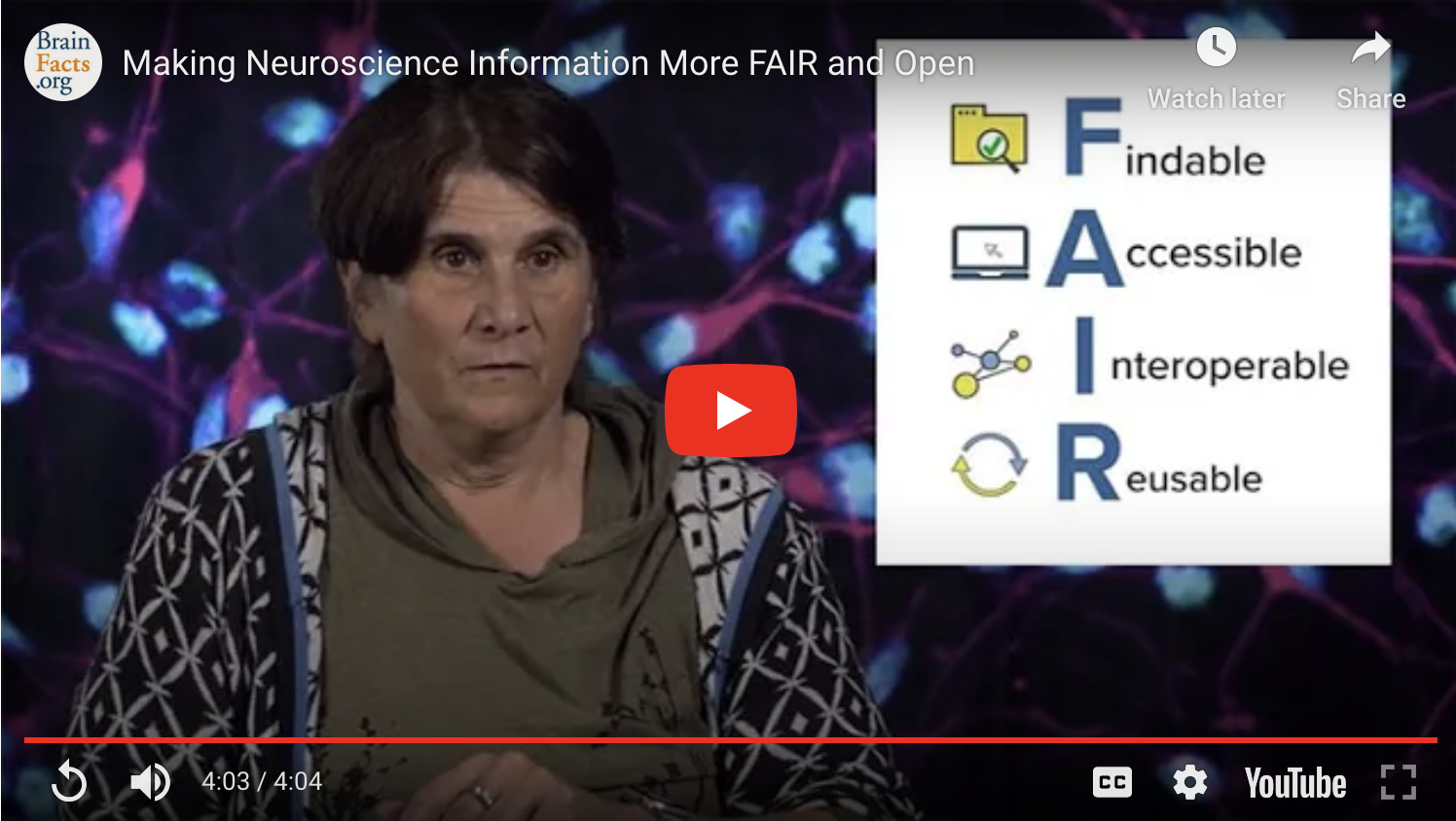
The SciCrunch Infrastructure was developed as a cooperative data platform to be used by diverse communities in making data more FAIR.

Contact Us
 scicrunch.org