Search Again
We support boolean queries, use +,-,<,>,~,* to alter the weighting of terms
EPILAB
A Matlab-based software package developed for supporting researchers in performing studies on the prediction of epileptic seizures. It provides an intuitive and convenient graphical user interface. Fundamental concepts that are crucial for epileptic seizure prediction studies were implemented.This includes, for example, the development and statistical validation of prediction methodologies in long-term continuous recordings. Seizure prediction is usually based on electroencephalography (EEG) and electrocardiography (ECG) signals. EPILAB is able to process both EEG and ECG data stored in different formats. More than 35 time and frequency domain measures (features) can be extracted based on univariate and multivariate data analysis. These features can be post-processed and used for prediction purposes. The predictions may be conducted based on optimized thresholds or by applying classifications methods such as artificial neural networks, cellular neuronal networks, and support vector machines.
- Resource
- SciCrunch
- 14 years ago - by Anonymous
South Dakota State University Genomics Sequencing Core Facility
Facility offers custom sequencing services from DNA/RNA extractions to sequencing using Illumina and Oxford Nanopore platforms. Projects examples include bulk RNAseq, 3\'RNASeq, Single Cell transcriptomics (10X Genomics), Genome sequencing, and amplicon sequencing (ie 16SRNA, genotyping). Services include experimental design and bioinformatics data analysis.
- Resource
- SciCrunch
- 3 years ago - submitted by Edyta Vieth
GENEHUNTER SAD
THIS RESOURCE IS NO LONGER IN SERVICE. Documented on April 6th,2023. Software application with implementation of the Sad statistic, more robust to transmission ratio distortion in the context of allele sharing (entry from Genetic Analysis Software)
- Resource
- SciCrunch
- 14 years ago - by Anonymous
MaCH-Admix
A genotype imputation software that is an extension to MaCH for faster and more flexible imputaiton, especially in admixed populations. It has incorporated a novel piecewise reference selection method to create reference panels tailored for target individual(s). This reference selection method generates better imputation quality in shorter running time. MaCH-Admix also separates model parameter estimation from imputation. The separation allows users to perform imputation with standard reference panels + pre-calibrated parameters in a data independent fashion. Alternatively, if one works with study-specific reference panels, or isolated target population, one has the option to simultaneously estimate these model parameters while performing imputation. MaCH-Admix has included many other useful options and supports VCF input files. All existing MaCH documentation applies to MaCH-Admix.
- Resource
- SciCrunch
- 14 years ago - by Anonymous
BCALM 2
Software tool for constructing compacted de Bruijn graph from sequencing data.Parallel algorithm that distributes the input based on minimizer hashing technique, allowing for good balance of memory usage throughout its execution.
- Resource
- SciCrunch
- 3 years ago - submitted by Edyta Vieth
HIV ontology
Ontology that encompasses all knowledge about HIV
- Resource
- SciCrunch
- 13 years ago - by Anonymous
caGWAS
Too that allows researchers to integrate, query, report, and analyze significant associations between genetic variations and disease, drug response or other clinical outcomes. SNP array technologies make it possible to genotype hundreds of thousands of single nucleotide polymorphisms (SNPs) simultaneously, enabling whole genome association studies. Within the Clinical Genomic Object Model (CGOM), the caIntegrator team created a domain model for Whole Genome Association Study Analysis. CGOM-caGWAS is a A semantically annotated domain model that captures associations between Study, Study Participant, Disease, SNP Association Analysis, SNP Population Frequency and SNP annotations. caGWAS APIs and web portal provide: * a semantically annotated domain model, database schema with sample data, seasoned middleware, APIs, and web portal for GWAS data; * platform and disease agnostic CGOM-caGWAS model and associated APIs; * the opportunity for developers to customize the look and feel of their GWAS portal; * a foundation of open source technologies; * a well-tested and performance-enhanced platform, as the same software is being used to house the CGEMS data portal; * accelerated analysis of results from various biomedical studies; and * a single application through which researchers and bioinformaticians can access and analyze clinical and experimental data from a variety of data types, as caGWAS objects are part of the CGOM, which includes microarray, genomic, immunohistochemistry, imaging, and clinical data.
- Resource
- SciCrunch
- 14 years ago - by Anonymous
conda-package-handling
Software to create and extract conda packages of various formats.
- Resource
- SciCrunch
- 3 years ago - submitted by Edyta Vieth
RmiR
R package that contains functions to merge microRNA and respective targets using different databases.
- Resource
- SciCrunch
- 13 years ago - by Anonymous
EYE-EEG (combined eye-tracking & EEG)
A plugin for the open-source MATLAB toolbox EEGLAB developed with the goal to facilitate integrated analyses of electrophysiological and oculomotor data. The plugin parses, imports, and synchronizes simultaneously recorded eye tracking data and adds it as extra channels to the EEG. Saccades and fixations can be imported from the eye tracking raw data or detected with an adaptive velocity-based algorithm. Eye movements are then added as new time-locking events to EEGLAB's event structure, allowing easy saccade- and fixation-related EEG analysis (e.g., fixation-related potentials, FRPs). Alternatively, EEG data can be aligned to stimulus onsets and analyzed according to oculomotor behavior (e.g. pupil size, microsaccades) in a given trial. Saccade-related ICA components can be objectively identified based on their covariance with the electrically independent eye tracker. All functions can be accessed via EEGLAB's GUI or called from the command line.
- Resource
- SciCrunch
- 14 years ago - by Anonymous
CTDConverter
Software Python scripts to convert CTD files into other formats such as Galaxy, CWL.
- Resource
- SciCrunch
- 3 years ago - submitted by Edyta Vieth
Insight Segmentation and Registration Toolkit
Open source, cross platform library that provides developers with extensive suite of software tools for image analysis. Developed through extreme programming methodologies, ITK builds on proven, spatially oriented architecture for processing, segmentation, and registration of scientific images in two, three, or more dimensions.
- Resource
- SciCrunch
- 17 years ago - by Anonymous
Phenix
A Python-based software suite for the automated determination of molecular structures using X-ray crystallography and other methods. Phenix includes programs for assessing data quality, experimental phasing, molecular replacement, model building, structure refinement, and validation. It also includes tools for reflection data and creating maps and models. Phenix can also be used for neutron crystallography. Tutorials and examples are available in the documentation tab.
- Resource
- SciCrunch
- 11 years ago - by Anonymous
Fast5 Library
Software C++ library for accessing Oxford Nanopore Technologies sequencing data.
- Resource
- SciCrunch
- 3 years ago - submitted by Edyta Vieth
mlgt
Software for processing and analysis of high throughput (Roche 454) sequences generated from multiple loci and multiple biological samples. Sequences are assigned to their locus and sample of origin, aligned and trimmed. Where possible, genotypes are called and variants mapped to known alleles.
- Resource
- SciCrunch
- 13 years ago - by Anonymous
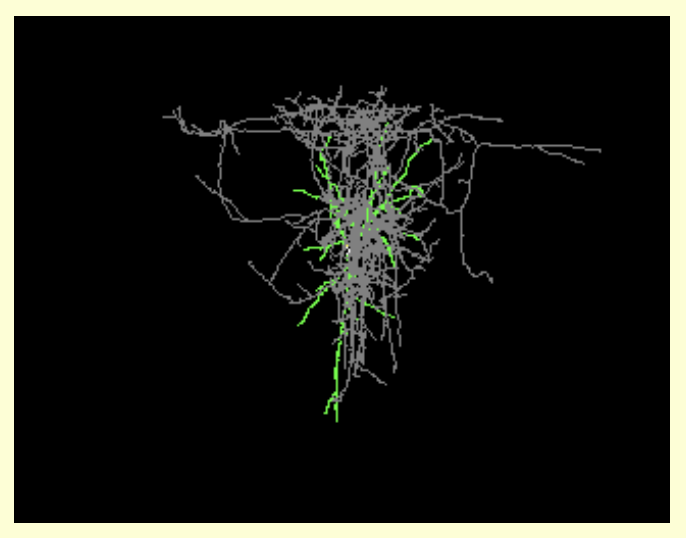
Human Brain Project Cell Morphology
Data set about mapping information provided as text files. The text files contain 3D representations of neuronal morphologies reconstructed using Neurolucida.
- Resource
- SciCrunch
- 11 years ago - by Anonymous
ImageTooth
Software library to generate images for odontograms.Allows to choose between png or jpg images.
- Resource
- SciCrunch
- 3 years ago - submitted by Edyta Vieth
multtest
Software package for non-parametric bootstrap and permutation resampling-based multiple testing procedures (including empirical Bayes methods) for controlling the family-wise error rate (FWER), generalized family-wise error rate (gFWER), tail probability of the proportion of false positives (TPPFP), and false discovery rate (FDR). Several choices of bootstrap-based null distribution are implemented (centered, centered and scaled, quantile-transformed). Single-step and step-wise methods are available. Tests based on a variety of t- and F-statistics (including t-statistics based on regression parameters from linear and survival models as well as those based on correlation parameters) are included. When probing hypotheses with t-statistics, users may also select a potentially faster null distribution which is multivariate normal with mean zero and variance covariance matrix derived from the vector influence function. Results are reported in terms of adjusted p-values, confidence regions and test statistic cutoffs. The procedures are directly applicable to identifying differentially expressed genes in DNA microarray experiments.
- Resource
- SciCrunch
- 13 years ago - by Anonymous
PyMICE
A Python library for analysis of mouse behavior. The library can be used for loading and analyzing of data obtained from IntelliCage system in an intuitive way in Python programming language. The library provides users with an object oriented application programming interface (API) and a data abstraction layer. It also comes with auxiliary tools supporting development of analysis workflows. Any published research making use of PyMICE must provide the PyMICE resource identifier (RRID:nlx_158570).
- Resource
- SciCrunch
- 12 years ago - by Anonymous
kempbasu
Software package implements two significance tests for comparing digital gene expression profiles. They provide two programs: Kemp for the frequentist test and Basu for the Bayesian test, and some auxiliary scripts.
- Resource
- SciCrunch
- 3 years ago - submitted by Edyta Vieth
About
The SciCrunch Infrastructure was developed as a cooperative data platform to be used by diverse communities in making data more FAIR.
Contact Us
 scicrunch.org