Search Again
We support boolean queries, use +,-,<,>,~,* to alter the weighting of terms
cnvHiTSeq
A set of Java-based command-line tools for detecting Copy Number Variants (CNVs) using next-generation sequencing data.
- Resource
- SciCrunch
- 13 years ago - by Anonymous
BRAT
BRAT is an accurate and efficient tool for mapping short bisulfite-treated reads obtained from the Solexa-Illumina Genome Analyzer.
- Resource
- SciCrunch
- 13 years ago - by Anonymous
Elephant shark genome sequencing
To explore the elephant shark genome, we have conducted a survey-sequencing and comparative analysis of the elephant shark genome in collaboration with J. Craig Venter Institute. The elephant shark sequences generated under this project have been deposited at GenBank under the project accession number AAVX01000000. The sequences can also be searched using BLAST and retrieved here. Cartilaginous fishes (Chondrichthyes) represented by sharks, rays, skates and chimaeras, are phylogenetically the oldest group of living jawed vertebrates. They constitute an important group for our understanding of the origins of the complex developmental and physiological systems of jawed vertebrates. They are also an useful outgroup for bony vertebrates such as tetrapods and teleost fishes and help in identifying specialized features that have led to the evolution of diverse groups of bony vertebrates. The elephant shark (Callorhinchus milii), also known as the elephant fish and ghost shark, is a chimaera belonging to the Order Chimaeriformes and Family Callorhynchidae. It has the smallest genome among the known cartilaginous fish genomes. Thus, it was proposed as a model cartilaginous fish genome for whole-genome sequencing and comparative analysis (Venkatesh et al. 2005. Curr. Biol. 15: R82-R83). The following resources of the elephant shark are available for the scientific community: *Elephant Shark 1.4x assembly fasta sequences zipped 227 megabytes *Genomic DNA *~8x coverage BAC library (average insert size, ~150 kb) *cDNA libraries (under construction) *cDNA (dated 11 April 2008) with orthologs in 5 vertebrates (human, opossum, chicken, frog, fugu)
- Resource
- SciCrunch
- 17 years ago - by Anonymous
Zebrafish Genome Project
Database of zebrafish genome.
- Resource
- SciCrunch
- 16 years ago - by Anonymous
Ontario Genomics Innovation Centre
StemCore Laboratories is a high-throughput genomics facility within the Ottawa Hospital Research Institute (OHRI). StemCore Laboratories is developing a world-class infrastructure for genomics, bioinformatics, and proteomics, and is capable of facilitating large-scale scientific research and biotechnology projects. Stemcore Laboratories seeks out projects that are challenging, cutting-edge, extend the boundaries of biological knowledge, and will positively impact the state of human health. Funded: Genome Canada, The Ontario Genomics Institute, The Canadian Foundation for Innovation, The Government of Ontario, The Stem Cell Network, Stantive Solutions
- Resource
- SciCrunch
- 17 years ago - by Anonymous
Genetic Analysis Software
THIS RESOURCE IS NO LONGER IN SERVICE. Documented on May 4th,2023. Listing of computer software for the gene mapping community on the following topics: genetic linkage analysis for human pedigree data, QTL analysis for animal/plant breeding data, genetic marker ordering, genetic association analysis, haplotype construction, pedigree drawing, and population genetics. The inclusion of a program should not be interpreted as an endorsement to that program from us. In the last few years, new technology produces new types of genetic data, and the scope of genetic analyses change dramatically. It is no longer obvious whether a program should be included or excluded from this list. Topics such as next-generation-sequencing (NGS), gene expression, genomics annotation, etc. can all be relevant to a genetic study, yet be specialized topics by themselves. Though programs on variance calling from NSG can be in, those can sequence alignment might be out; programs on eQTL can be in, those on differential expression might be out. This page was created by Dr. Wentian Li, when he was at Columbia University (1995-1996). It was later moved to Rockefeller University (1996-2002), and now takes its new home at North Shore LIJ Research Institute (2002-now). The present copy is maintained by Jurg Ott as a single file. More than 240 programs have been listed by December 2004, more than 350 programs by August 2005, close to 400 programs by December 2006, and close to 480 programs by November 2008, and over 600 programs by October 2012. A version of the searchable database was developed by Zhiliang Hu of Iowa State University, and a recent round of updating was assisted by Wei JIANG of Harbin Medical School. Some earlier software can be downloaded from EBI: ftp://ftp.ebi.ac.uk/pub/software/linkage_and_mapping/ (Linkage and Mapping Software Repository), and http://genamics.com/software/index.htm may contain archived copy of some programs.
- Resource
- SciCrunch
- 17 years ago - by Anonymous
Ensembl Protists
The Ensembl Genomes project produces genome databases for important species from across the taxonomic range, using the Ensembl software system. Five sites are now available, one of which is Ensembl Protists, which houses protists species. Sponsors: EnsembProtists is a project run by EMBL - EBI to maintain annotation on selected genomes, based on the software developed in the Ensembl project developed jointly by the EBI and the Wellcome Trust Sanger Institute.
- Resource
- SciCrunch
- 17 years ago - by Anonymous
Eagle I
Web application to discover resources available at participating networked universities. This distributed platform for creating and sharing semantically rich data is built around semantic web technologies and follows linked open data principles.
- Resource
- SciCrunch
- 16 years ago - by Anonymous
TRACULA
Software tool developed for automatically reconstructing a set of major white matter pathways in the brain from diffusion weighted images using probabilistic tractography. This method utilizes prior information on the anatomy of the pathways from a set of training subjects. By incorporating this prior knowledge in the reconstruction procedure, our method obviates the need for manual intervention with the tract solutions at a later stage and thus facilitates the application of tractography to large studies. The trac-all script is used to preprocess raw diffusion data (correcting for eddy current distortion and B0 field inhomogenities), register them to common spaces, model and reconstruct major white matter pathways (included in the atlas) without any manual intervention. trac-all may be used to execute all the above steps or parts of it depending on the dataset and user''''s preference for analyzing diffusion data. Alternatively, scripts exist to execute chunks of each processing pipeline, and individual commands may be run to execute a single processing step. To explore all the options in running trac-all please refer to the trac-all wiki. In order to use this script to reconstruct tracts in Diffusion images, all the subjects in the dataset must have Freesurfer Recons.
- Resource
- SciCrunch
- 15 years ago - by Anonymous
NIH electronic Research Materials catalogue
Database and tool for finding and licensing unpatented research materials to for-profit entities. eRMa was developed by the NIH Office of Technology Transfer to expedite the process for transferring unpatented research materials to for-profit entities. NIH researchers make unpatented materials available to companies through internal use licenses executed by the OTT to support the continued advancement of scientific research. Examples of materials include mouse models used to develop new cancer therapies and cell lines used to test new therapies for chronic diseases, such as high blood pressure. An NIH internal use license is a contract that governs the transfer of tangible research materials from NIH to a company for commercial research use.
- Resource
- SciCrunch
- 16 years ago - by Anonymous
Brain Decoder Toolbox
Software that performs ?decoding? of brain activity, by learning the difference between brain activity patterns among conditions and then classifying the brain activity based on the learning results. BDTB is a set of Matlab functions. BDTB is OS-independent.
- Resource
- SciCrunch
- 14 years ago - by Anonymous
Djavad Mowafaghian Centre for Brain Health
Research facility for research on neurological and psychiatric disorders on the learning brain and the aging brain. The Centre utilizes a multidisciplinary approach to explore the causes and potential treatments of disorders like Alzheimer's disease, mental health and addiction, stroke and neurotrauma. The Centre focuses on translating research into patient care and therapies.
- Resource
- SciCrunch
- 15 years ago - by Anonymous
Baltimore Longitudinal Study of Aging (BLSA)
America''s longest-running scientific study of human aging, begun in 1958. BLSA scientists are learning what happens as people age and how to sort out changes due to aging from those due to disease or other causes. More than 1,400 men and women are study volunteers. They range in age from their 20s to their 90s. This study is currently recruiting healthy seniors over 70.
- Resource
- SciCrunch
- 15 years ago - by Anonymous
Tripod
Tripod is a user-friendly chemical genomics browser that is currently being developed by the informatics group at the NIH Chemical Genomics Center. The main goal of Tripod is to facilitate easy access to chemical and biological data in an intuitive, user-friendly tool. To this end, the development of Tripod is inspired by the ubiquitous iTunes software, whereby browsing and managing of media contents are being adapted to chemical and biological data.
- Resource
- SciCrunch
- 15 years ago - by Anonymous
ALSA - The Australian Longitudinal Study of Ageing
The general purpose of ALSA is to examine how social, biomedical, psychological, economic, and environmental factors are associated with age-related changes in the health and wellbeing of persons aged 70 years and older. The aim is to analyze the complex relationships between individual and social factors and changes in health status, health care needs and service utilization dimensions, with emphasis given to the effects of social and economic factors on morbidity, disability, acute and long-term care service use, and mortality. The study was designed to have common instrumentation with US studies. ALSA collected data from a random, stratified sample of all persons (both community and institution-dwelling) aged 70 years and older living in the metropolitan area of Adelaide, South Australia, using the State Electoral Database as the sampling frame. Spouses aged 65 and older and other household members aged 70 years and older also were invited to participate. The initial baseline data collection for ALSA began in September 1992 and was completed in March 1993. In the first wave, personal interviews were carried out for 2,087 participants, including 566 couples (that is, persons 70 years of age and over and their spouse, if 65 and over). Clinical assessments were obtained for 1,620 of the participants. Respondents were recontacted by telephone a year after initial interview (wave 2). The third wave of the study began in September 1994 and involved a complete reassessment, with a total of 1,679 interviews and 1,423 clinical assessments. To date, eleven waves of data have been collected, with the latest collection in May 2010, from 168 participants. Six of these waves were conducted via face-to-face interviews and clinical assessments, and five were telephone interviews. Future waves are planned, however are dependent on grant funding. Ancillary data collection has been ongoing since the initiation of the study, e.g., from secondary providers. Lists of ALSA participants are compared biannually with the agencies'' lists to determine the prevalence and incidence of receipt of services from these organizations. Another source of information has been the collection of data from the participants'' general practitioners about the respondent''s health status, history of services received, medication use, referrals to specialists, and current services provided. Baseline Sample Size: 2087 Dates of Study: 1992����������2010 (potentially ongoing) Study Features: * Longitudinal * International * Anthropometric Measures * Biospecimens Waves 1-5 (ICPSR), http://www.icpsr.umich.edu/icpsrweb/ICPSR/studies/06707 Wave 6 (ICPSR), http://www.icpsr.umich.edu/icpsrweb/ICPSR/studies/03679
- Resource
- SciCrunch
- 15 years ago - by Anonymous
MINAS - Metal Ions in Nucleic AcidS
Database compiling the detailed information on innersphere, outersphere and larger coordination environment of >70,000 metal ions of 36 elements found in >2000 structures of nucleic acids contained today in the PDB and NDB. MINAS is updated monthly with new structures and offers a multitude of search functions, e.g. the kind of metal ion, metal-ligand distance, innersphere and outersphere ligands defined by element or functional group, residue, experimental method, as well as PDB entry-related information. The results of each search can be saved individually for later use with so-called miniPDB files containing the respective metal ion together with the coordination environment within a 15 A radius. MINAS thus offers a unique way to explore the coordination geometries and ligands of metal ions together with the respective binding pockets in nucleic acids.
- Resource
- SciCrunch
- 15 years ago - by Anonymous
GWASrap
GWASrap is a comprehensive web-based bioinformatics tool to systematically support variant representation, annotation and prioritization for data generated from genome-wide association studies (GWAS) and Next Generation Sequencing (NGS). Our web-based framework utilizes state-of-the-art web technologies to maximize user interaction and visualization of the results. For a given SNP dataset with its P-values, GWASrap will first provide a Circos-style plot to visualize any genetic variants at either the genome or chromosome level. The tool then combines different genomic features (SNP/CNV density, disease susceptibility loci, etc.) with comprehensive annotations that give the researcher an intuitive view of the functional significance of the different genomic regions. The detailed statistics of the underlying study are also displayed on the web page, including variant distribution in different functional categories, classic Manhattan plot and QQ plot. Users can perform interactive operations in the Manhattan panel, such as zooming in and out to search regions or markers of interest. The system can also display a comprehensive range of relevant information from variant genetic attributes to nearby genomic elements, such as enhancers or non-coding RNAs. Furthermore, researchers can obtain extensive functional predictions for various features including transcription factor-binding sites, miRNA and miRNA target sites, and their predicted changes caused by the genetic variants. Our system can re-prioritize genetic variants by combining the original statistical value and variant prioritization score based on a simple additive effect equation. Researchers can also re-evaluate the significance of a trait/disease-associated SNP (TAS) using the dynamic linkage disequilibrium (LD) panel or the tree-like network panel. The GWASrap supports input variants in different formats, not only common variants with a dbSNP rs ID but also rare variants from NGS data, which are represented by chromosome and locations. GWASrap provides a range of web services for data retrieving about the annotation information and effect prediction of each variant in dbSNP using the SOAP interface. The WSDL for each service is available in the API tab. Each service returns JSON string including all related information with key/value. GWASrap provides running results about some current published GWAS as well as a category view for each hot disease / trait. The dataset is brought from published database GWAS or curated from literature.
- Resource
- SciCrunch
- 15 years ago - by Anonymous
ExTopoDB
A publicly accessible database of experimentally derived topological models of transmembrane proteins. It contains experimental information about the topology of 2143 transmembrane proteins. This information was collected from studies in the literature that reported the use of biochemical methods for the determination of the topology of transmembrane proteins. Each record contains unique information about the given protein, such as its sequence, cross-references to many publicly available databases worldwide, the protein''s name and organism source. The web interface of the database offers the user the ability to submit advanced queries for text search within ExTopoDB''s protein entries and there is also an interface for running BLAST against the database. Furthermore, the results of topology prediction using the HMM-TM algorithm are included for each protein in the database (unconstrained prediction) and we also incorporated the experimental information about the topology of the proteins in the HMM-TM prediction procedure, producing more reliable topology models (constrained prediction).
- Resource
- SciCrunch
- 15 years ago - by Anonymous
Biologic Specimen and Data Repository Information Coordinating Center (BioLINCC)
Repository that serves to coordinate searches across data and biospecimen collections from participants in numerous clinical trials and epidemiologic studies and to provide an electronic means for requests for additional information and the submission of requests for collections. The collections, comprising data from more than 80 trials or studies and millions of biospecimens, are available to qualified investigators under specific terms and conditions consistent with the informed consents provided by the individual study participants. Some datasets are presented with studies and supporting materials to facilitate their use in reuse and teaching. Datasets support basic research, clinical studies, observational studies, and demonstrations. Researchers wishing to apply to submit biospecimen collections to the NHLBI Biorepository for sharing with qualified investigators may also use this website to initiate that process.
- Resource
- SciCrunch
- 15 years ago - by Anonymous
Neuroimaging in Python
Community site to make brain imaging research easier that aims to build software that is clearly written, clearly explained, a good fit for the underlying ideas, and a natural home for collaboration.
- Resource
- SciCrunch
- 15 years ago - by Anonymous
About
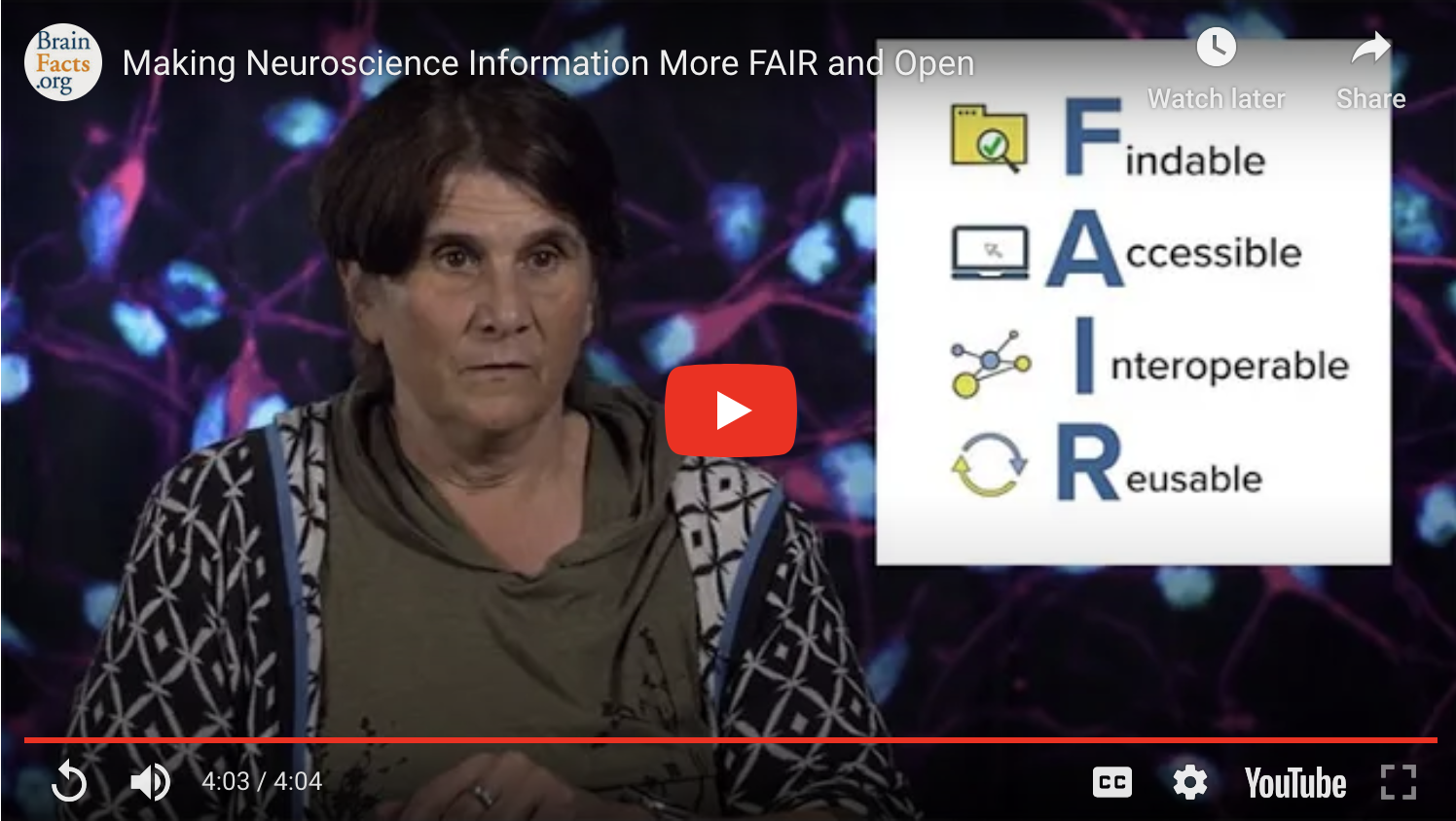
The SciCrunch Infrastructure was developed as a cooperative data platform to be used by diverse communities in making data more FAIR.
Contact Us
 scicrunch.org