Search Again
We support boolean queries, use +,-,<,>,~,* to alter the weighting of terms
α-Tubulin (11H10) Rabbit mAb #2125
The cytoskeleton consists of three types of cytosolic fibers: microtubules, microfilaments (actin filaments), and intermediate filaments. Globular tubulin subunits comprise the microtubule building block, with α/β-tubulin heterodimers forming the tubulin subunit common to all eukaryotic cells. γ-tubulin is required to nucleate polymerization of tubulin subunits to form microtubule polymers. Many cell movements are mediated by microtubule action, including the beating of cilia and flagella, cytoplasmic transport of membrane vesicles, chromosome alignment during meiosis/mitosis, and nerve-cell axon migration. These movements result from competitive microtubule polymerization and depolymerization or through the actions of microtubule motor proteins (1).
- Resource
- SciCrunch
- 7 years ago - submitted by Ming Shen
PAFScaff
Software as Pairwise mApping Format reference based Scaffold anchoring and super scaffolding tool. Dsigned for mapping genome assembly scaffolds to closely related chromosome level reference genome assembly.
- Resource
- SciCrunch
- 7 years ago - submitted by Richard Edwards
NetPhos
Web tool as artificial neural network method that predicts phosphorylation sites in independent sequences. Web application based on determination of activity of protein kinases using in vitro assays with either naturally occurring peptides or synthetic peptides. NetPhos 3.1 server predicts serine, threonine or tyrosine phosphorylation sites in eukaryotic proteins using ensembles of neural networks. Both generic and kinase specific predictions are performed. Generic predictions are identical to predictions performed by NetPhos 2.0. Kinase specific predictions are identical to predictions by NetPhosK 1.0. NetPhos 3.1 is available as stand-alone software package.
- Resource
- RRID-Legacy
- 7 years ago - by Anonymous
CandiMeth
Software tool for visualisation and quantification of DNA methylation at candidate features.
- Resource
- SciCrunch
- 7 years ago - submitted by Sara-Jayne Thursby
k-FLBPCM method
Software tool as novel k-FLBPCM method for detecting morphologically similar crops and weeds based on combination of contour masks and Local Binary Pattern operators.
- Resource
- RRID-Legacy
- 7 years ago - submitted by Vi Nguyen Thanh Le
Fusion software
Software for analyzing mouse behavior by Omnitech Electronics Inc.
- Resource
- RRID-Legacy
- 7 years ago - by Anonymous
LINDA
Software R package for automated segmentation of chronic stroke lesions. Automated segmentation algorithm capable of learning relationship between existing manual segmentations and single T1-weighted MRI.
- Resource
- RRID-Legacy
- 7 years ago - by Anonymous
CRISPy-web
Web tool to design sgRNAs for CRISPR applications. Web tool based on CRISPy to design sgRNAs for any user-provided microbial genome. Implemented as standalone web application for Cas9 target prediction.
- Resource
- RRID-Legacy
- 7 years ago - submitted by Yaojun Tong
NEB Tm calculator
Calculator to estimate appropriate annealing temperature when using NEB PCR products.Tm calculator provided by New England Biolabs.
- Resource
- RRID-Legacy
- 7 years ago - submitted by Yaojun Tong
merge-gbk-records
Software tool to merge multiple GenBank records using defined spacer sequence.Used to turn multiple GenBank records either in multiple files or single multi-record file into single record.
- Resource
- RRID-Legacy
- 7 years ago - submitted by Yaojun Tong
LESYMAP
Software R package to conduct lesion-to-symptom mapping from human MRI data.Takes lesion maps and cognitive performance scores from patients with stroke, and maps brain areas responsible for cognitive deficit.
- Resource
- RRID-Legacy
- 7 years ago - by Anonymous
Vieworks
Optics and Imaging Company. Vieworks has developed imaging technologies for various areas and has offered solutions suitable for the digital X-ray detector, industrial camera, and in vivo imaging system.
- Resource
- RRID-Legacy
- 7 years ago - by Anonymous
CopyNumber450kCancer
Software R package baseline correction for accurate copy number calling from 450k methylation array. Baseline correction for copy number data from cancer samples. Implements maximum density peak estimation (MDPE) method together with interactive reviewing to efficiently correct baseline in cancer samples.
- Resource
- RRID-Legacy
- 7 years ago - by Anonymous
Washington University in St. Louis; Missouri; USA
Private research university in Greater St. Louis with its main campus mostly in unincorporated St. Louis County, Missouri and Clayton, Missouri.
- Resource
- RRID-Legacy
- 7 years ago - submitted by Edyta Vieth
Primate Cell Type Database
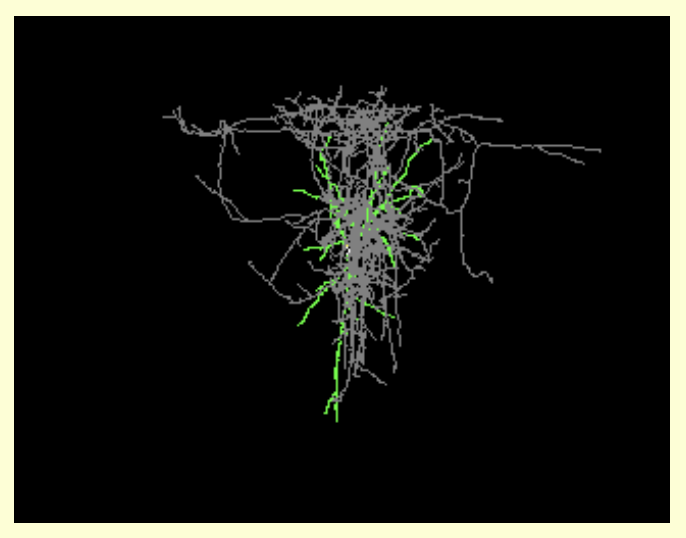
Database of intracellular recordings of non-human primates (NHP) cells sampled from the lateral prefrontal cortex. 249 patch clamp recordings for 2 protocols: 1 second current pulse and 3 millisecond pulse. Morphology obtained by biocytin injections and confocal imaging at 63x magnification.
- Resource
- RRID-Legacy
- 7 years ago - submitted by Anita Bandrowski
JTK_CYCLE
Software R package for Detecting Rhythmic Components in Genome-Scale Data Sets. Non-parametric algorithm to identify rhythmic components in large datasets. Identifies and characterizes cycling variables in large datasets.
- Resource
- RRID-Legacy
- 7 years ago - by Anonymous
syGlass
Software visualization tool for direct volume rendering with no segmentation required. Enables users to view, annotate and analyze 3D data in VR. Data visualization and annotation system that allows rendering of large, volumetric data in its true, three- or four-dimensional form.
- Resource
- RRID-Legacy
- 7 years ago - by Anonymous
Chromosome Scale Assembler
Software pipeline for high-throughput chromosome level vertebrate genome assembly. Pipeline, which after contig assembly performs post assembly improvements by ordering assembly and closing gaps, as well as splitting of low supported regions.
- Resource
- SciCrunch
- 7 years ago - submitted by Heiner Kuhl
South Carolina Medical University Mass Spectrometry Core Facility
Core provides expertise, services, education, and instrumentation to enhance biomedical research through LC-MS/MS-based proteomics. Services are offered for protein identification; characterization of post-translational modifications; and quantitative proteomics to identify differentially expressed/degraded proteins, regulated sites of post-translational modification, protein-protein interactions, and protein targets of drugs identified in phenotypic screens. Analyses include sample preparation, LC-MS/MS, database searching, generation of reports, and assistance with data interpretation. Faculty and staff assist with experimental design and development/optimization of customized methodology for analysis of post-translationally modified peptides (e.g. phosphorylation and O-GlcNAc modification, N- and O-linked glycosylation, Cys modifications including S-glutathionylation, and glycation of Lys and Arg). Quantitative approaches including metabolic labeling (SILAC), isobaric tagging (iTRAQ/TMT), and label free proteomics (LFQ) are performed on Orbitrap Elite or Orbitrap Fusion Lumos Mass Spectrometers. Developes methodology to identify alterations in post-translational modifications that impact signal transduction, transcription, translation, and response to therapeutics with goal of enabling investigators to discover molecular mechanisms underlying disease progression and therapeutic response.
- Resource
- SciCrunch
- 7 years ago - submitted by Edyta Vieth
Virginia Tech Biocomplexity Institute Genomics Sequencing Center Core Facility
Core for development and application of Next-Generation Sequencing technologies. Provides experimental design consultation, and genomic, transcriptomic, and functional-genomics services. Specializes in development and application of Next-Generation Sequencing technologies and bioinformatics analyses. Instruments include Illumina NovaSeq 6000, Illumina NextSeq 500,Illumina MiSeq,Thermo Ion S5. Services include mRNA-Seq: Stranded and non-stranded, high levels of multiplexing up to 96 or more samples on NovaSeq;Standard amounts, Stranded-Seq: 500 ng total RNA, RIN 8;Low Input amounts, Stranded-Seq: 5 ng to 100 ng total RNA;Ultra Low Input amounts, Non-Stranded-Seq: 1-1000 cells or 10 pg - 10 ng;Total RNA-Seq - Stranded: 5-250 ng;Small RNA-Seq: 1 ug, multiplexing up to 48 samples/NextSeq run;Partially degraded samples - Stranded and Non-Stranded: LCM, FFPE samples, both stranded and non-stranded, 50 -100 ng;Microbial rRNA depletion and RNA-Seq with amounts as low as 1-5 ug of total RNA;Whole Genome Sequencing;Human / Animal / Plant;Microbial;As low as 1 ng De novo Sequencing;Exome/Targeted capture re-sequencing: Enables high sequencing depths;Agilent and Illumina platforms;Human, Mouse, Canine and other species;Targeted re-sequencing: High levels of multiplexing up to 200 samples / MiSeq run;PCR Amplicon sequencing;Illumina and Agilent platforms;ChIP-Seq;Transcription factor analysis;Histone modifications;DNA Methylation;MeDIP- and MBD-Seq;MethylC-Seq;Agilent SureSelect MethylC-Seq;Nucleosome Mapping;FAIRE-Seq and DNAse I-Seq;16S / 18S / ITS amplicon sequencing;Whole Genome Metagenomic sequencing;Metatranscriptomic analysis;DNA/chromatin fragmentation by Covaris DNA / RNA quality analysis: BioAnalyzer / TapeStation assay, Qubit (Picogreen) assays;qPCR services.
- Resource
- SciCrunch
- 7 years ago - submitted by Edyta Vieth
About
The SciCrunch Infrastructure was developed as a cooperative data platform to be used by diverse communities in making data more FAIR.

Contact Us
 scicrunch.org